
System Design /
Leadership & Influence
Making Research Scalable with AI
Rebuilding an org’s research capability under 24 contributors, no budget, and collapsing workflows.
What This Project Achieved
6 Months → Minutes $60,000 → $0
Reduced research time from 4–6 months to minutes
Eliminated vendor cost from USD 40,000–60,000 per study to $0
Built an internal research automation portal with 80–90% accuracy, relevancy, and consistency
Aligned 24 contributors across 3 countries
The only team with 2 projects selected to present to EXCO (CEO, CPO, CTO) while most teams are not even selected.
Declared a P0 strategic initiative the following year
Project at a glance
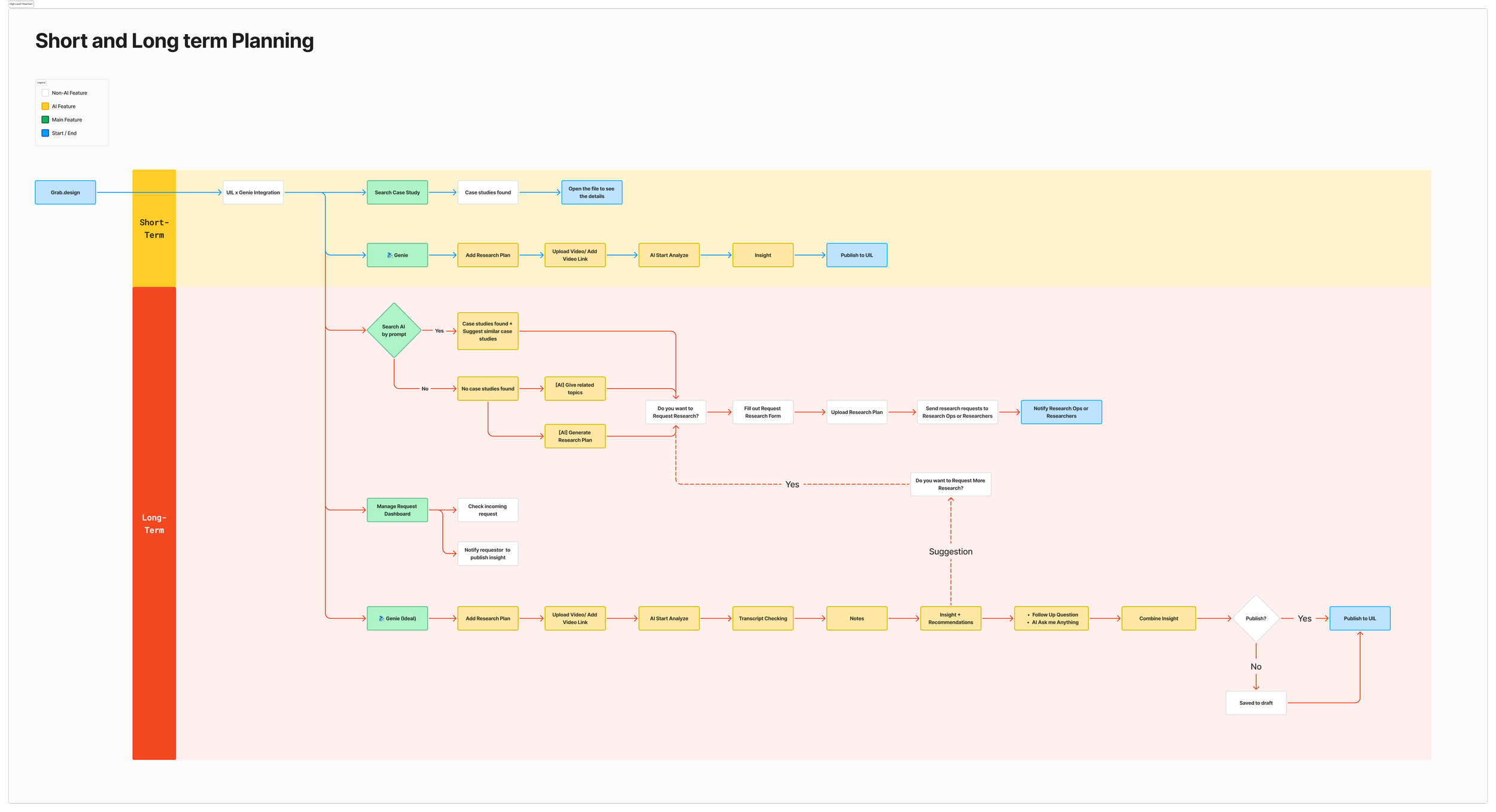
Context
Research Org Collapsed. The Business Still Needed Insights.
The research function was dismantled.
Vendors were too slow and too expensive.
PMs were blocked. Design was blocked. Compliance was blocked.
Insights took months.
But the business still needed:
Real user signals
Fast problem validation
Data-informed decision making
Regulator-ready evidence
There was no owner, no system, and no budget.
I took responsibility for rebuilding the capability.
my role
Leadership & Alignment
Coordinated 26 contributors across Singapore, Indonesia, and Malaysia
Managed cross-functional alignment: Product, Design, Data, Engineering, Ops
System Design
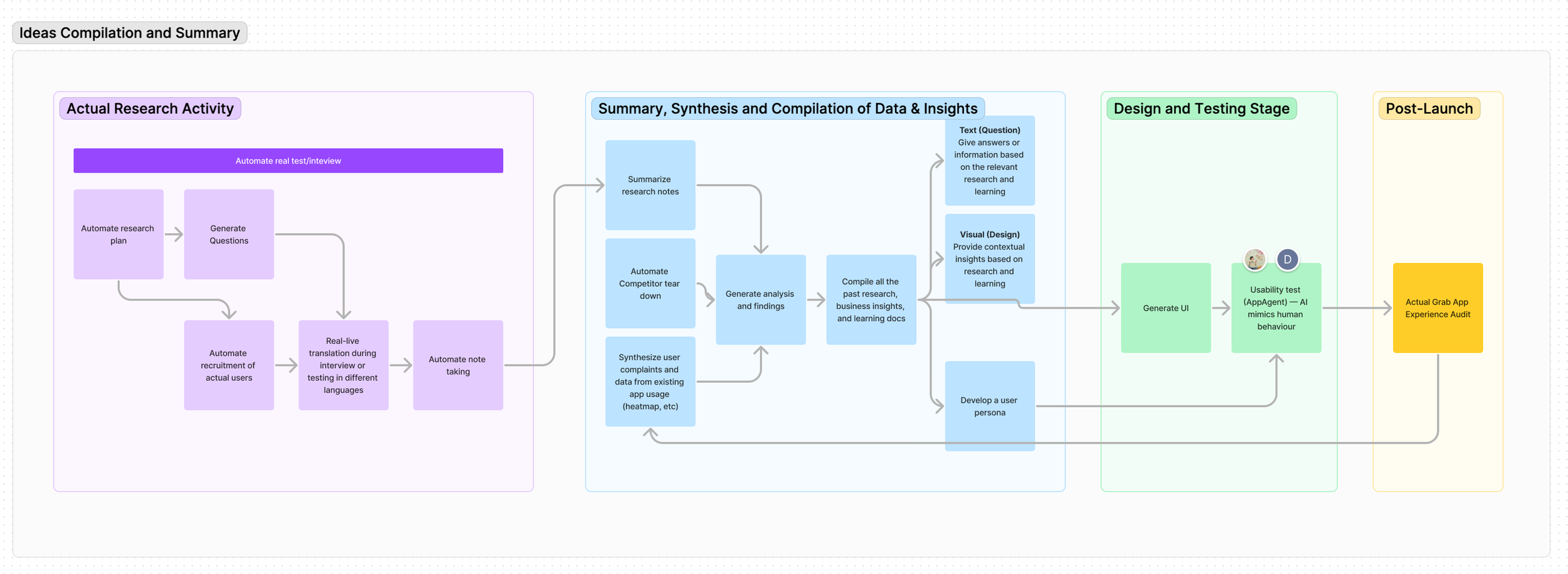
Defined the entire research workflow:
Actual research activity → summary, synthesis, and compilation of data & analysis → design and testing stage → post launch
AI Automation Architecture
Designed prompt logic
Defined document parsing rules
Set evaluation accuracy criteria
Guided engineers across 4 squads
Unblocked technical dead ends
Craft
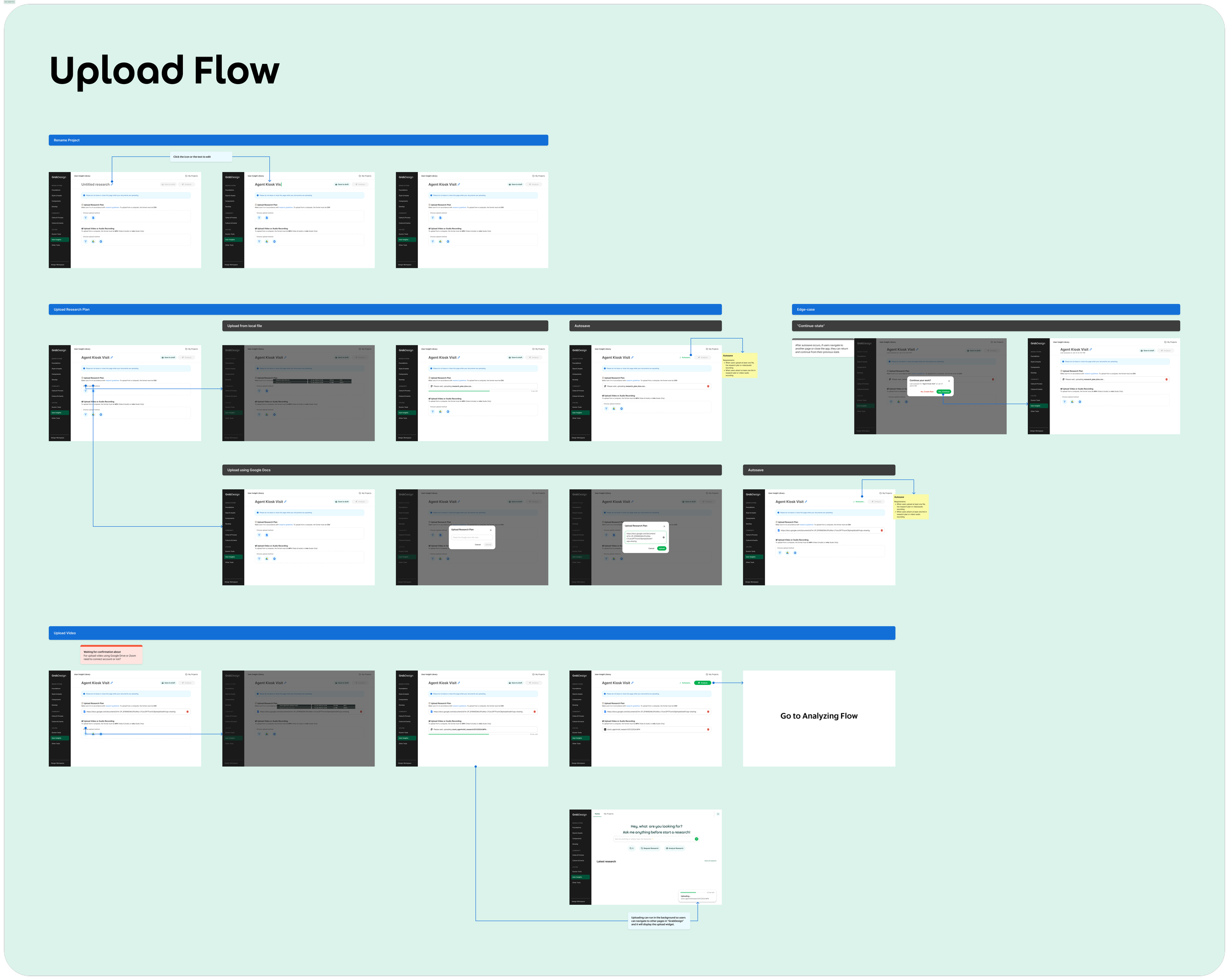
Designed the portal UX (flows, states, error handling, navigation)
Made the interface simple enough to use
Executive Communication
Drove the narrative
Maintained momentum
Delivered the pitch to EXCO (CEO, CPO, CTO)
What I Designed (UX + System)
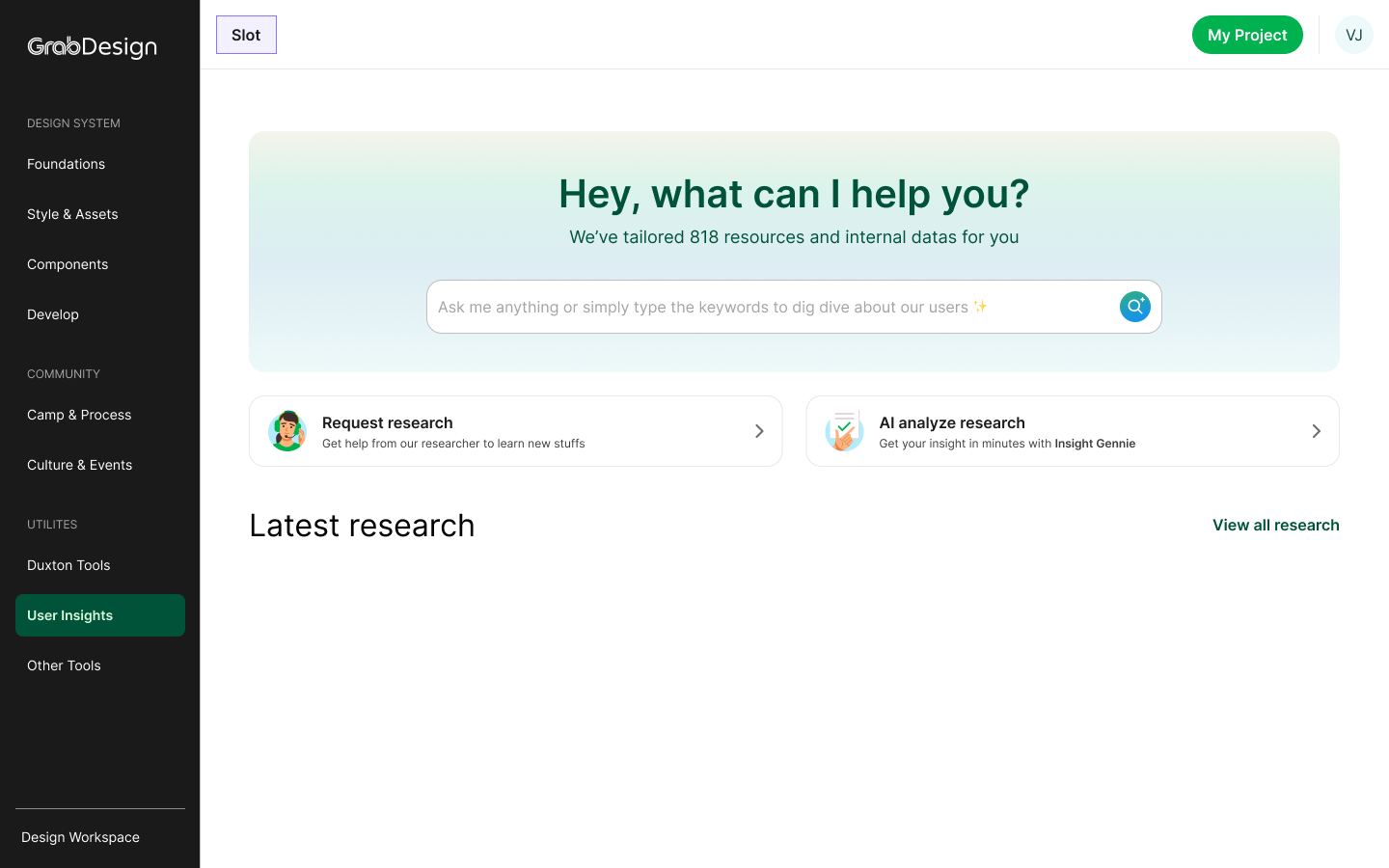
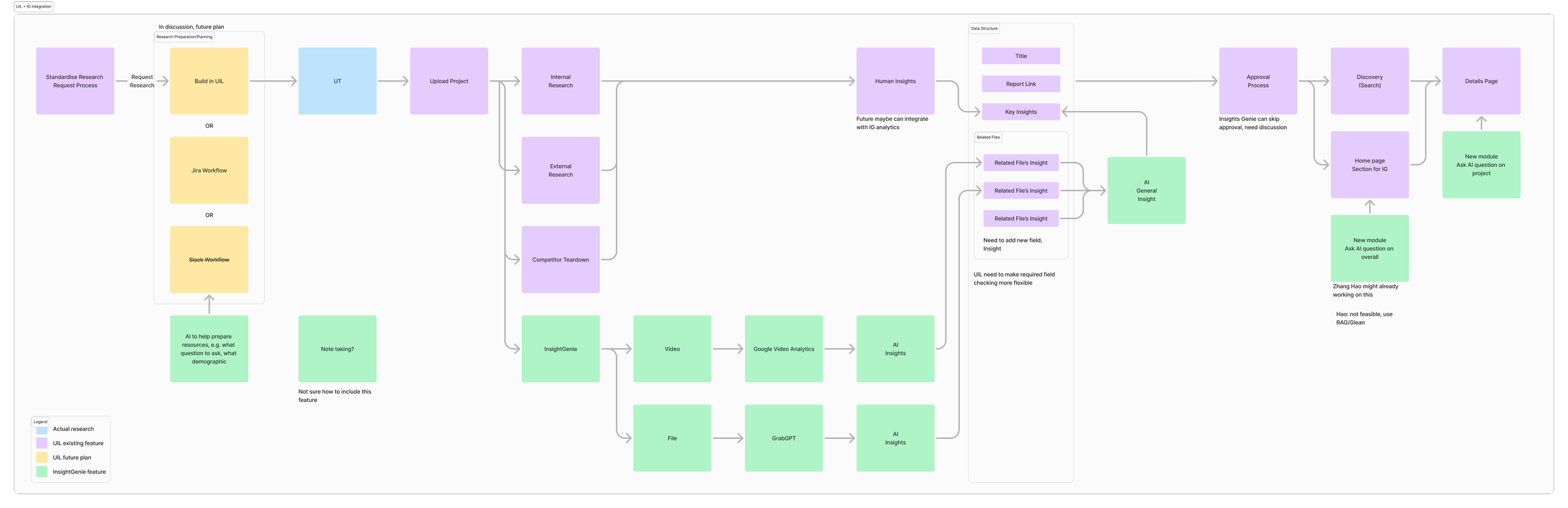
The Full Research Workflow System
Research question intake
Data source selection
Processing pipelines
AI extraction logic
Insight layer
Usability Test generation (1–click UT plan)
Validation
Output delivery
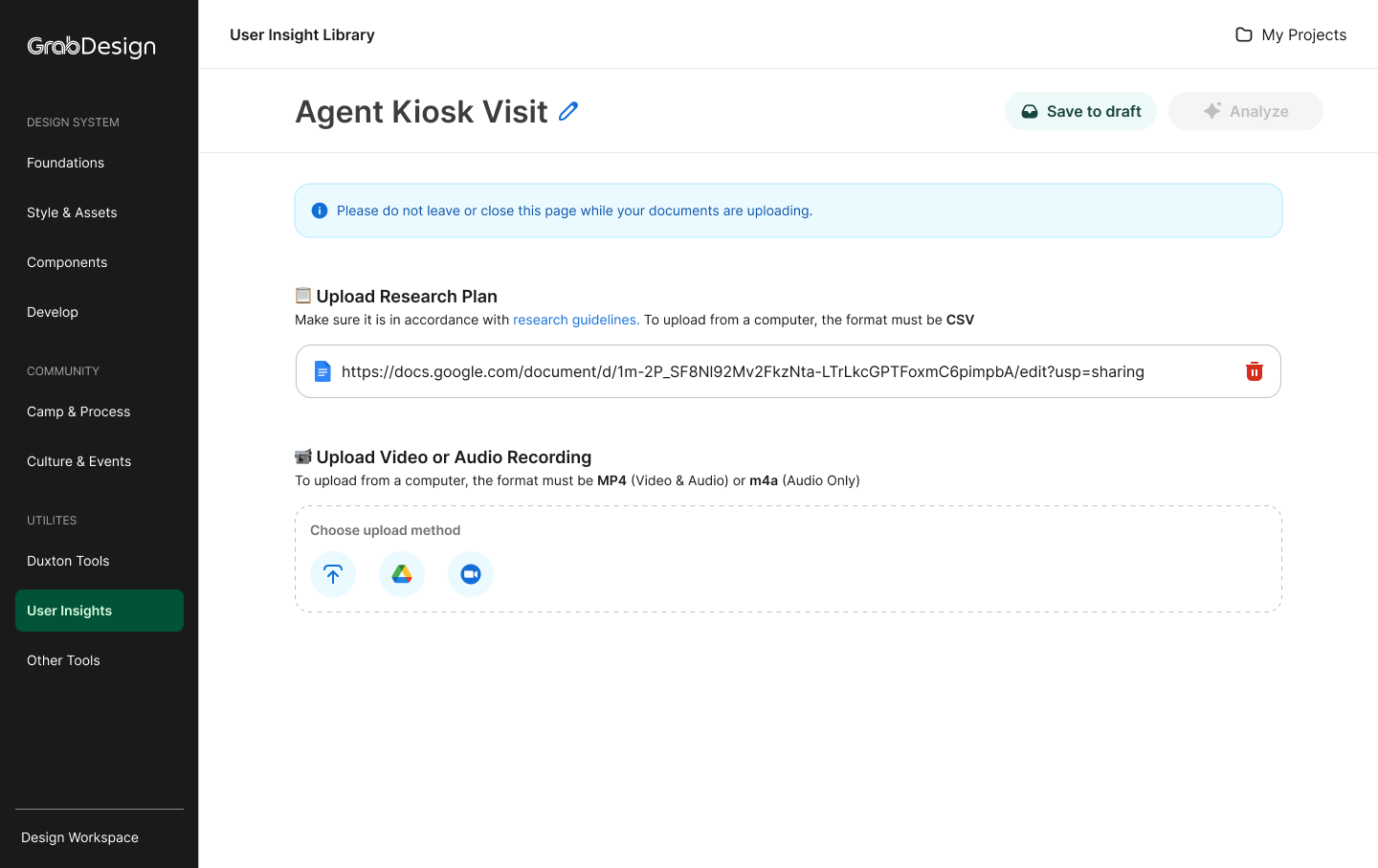
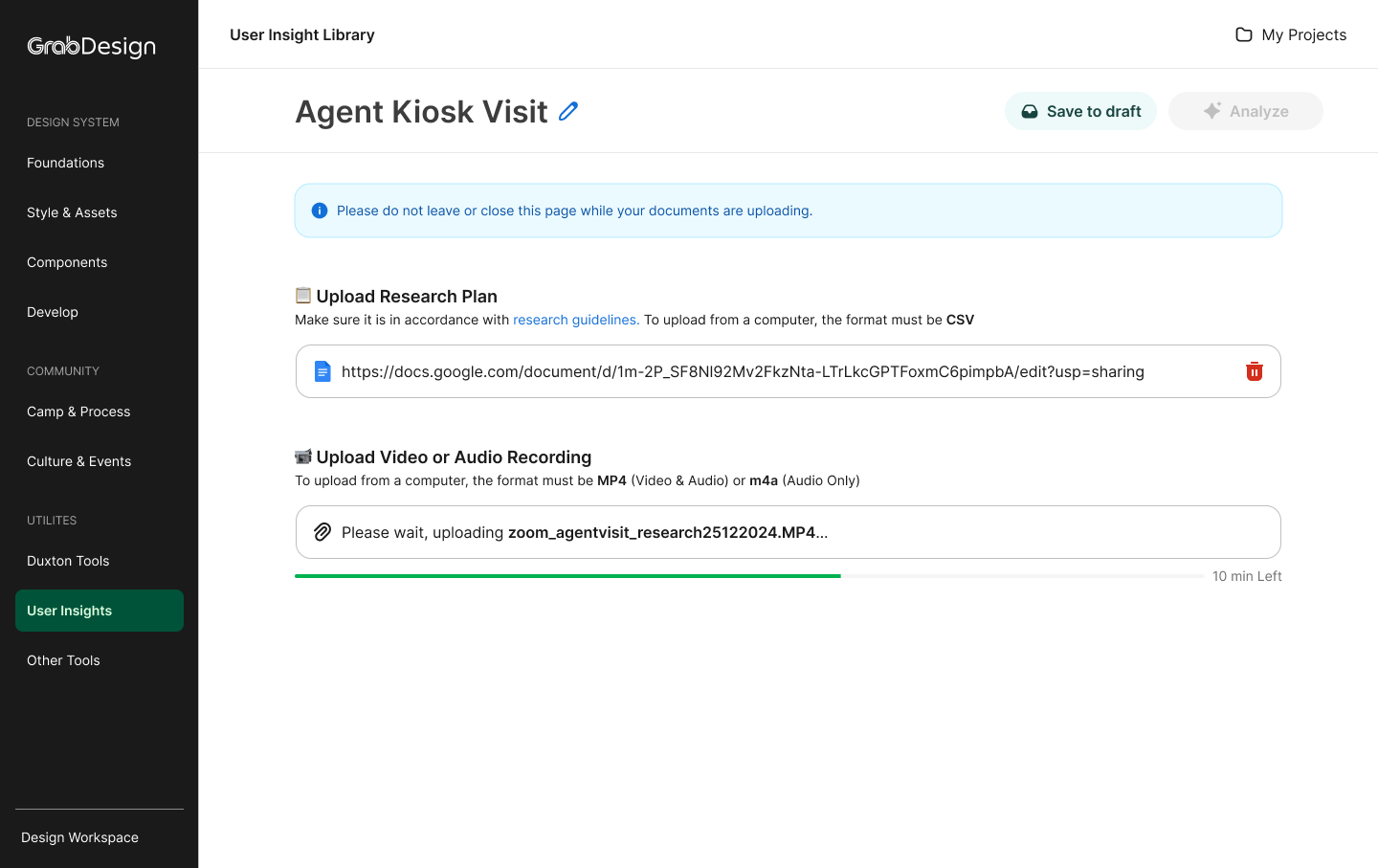
The Portal UX — Simple, Fast, Zero Training
Core UX decisions:
Search-first interface (people think in queries, not folders)
Auto-summaries by default (remove cognitive load)
Always-available validation step (keeps AI honest)
Clear source-of-truth linking (no hallucination ambiguity)
Lightweight interaction patterns to minimize PM learning curve
Edge-case handling:
Partial data
Conflicting signals
Low-confidence insights
Multi-language datasets
Noisy feedback
Collaboration Model
A full cross-functional machine
4 engineers (backend, pipelines, interface)
A Business owner
Design partners (flows, states, clarity)
Research ops & Compliance (data privacy, approval workflows)
Outcome & Impact
Quantitative
Research time 4–6 months → minutes
Vendor cost $40–60k per study → $0
Analysis accuracy 80–90%
Adoption across multiple teams
Senior leadership declared it a P0 org initiative
Qualitative
PMs regained confidence in decision-making
Faster ability to validate risky bets
Teams became unblocked during a chaotic org transition
Standardized research → one shared language for insights
What Was Hard (and How I Solved It)
When no one owns the problem, I take the ownership and I turn chaos into a working system
No owner → I became the owner
Lack of engineers → I secured 2 through aligned incentives
No clarity → I defined the workflow and process
No trust in AI → I built validation layers
No adoption → I made UX idiot-proof
Org chaos → I created squads and structure
Skepticism → I built POCs that proved value
Lessons Learned
Cross-functional sequencing matters more than AI prompts
AI works only when workflows are well-designed
Cross-functional sequencing matters more than AI prompts
Simple UX beats powerful UX
Showing value early unblocks people and belief
System-level thinking scales better than “features”
What’s Next
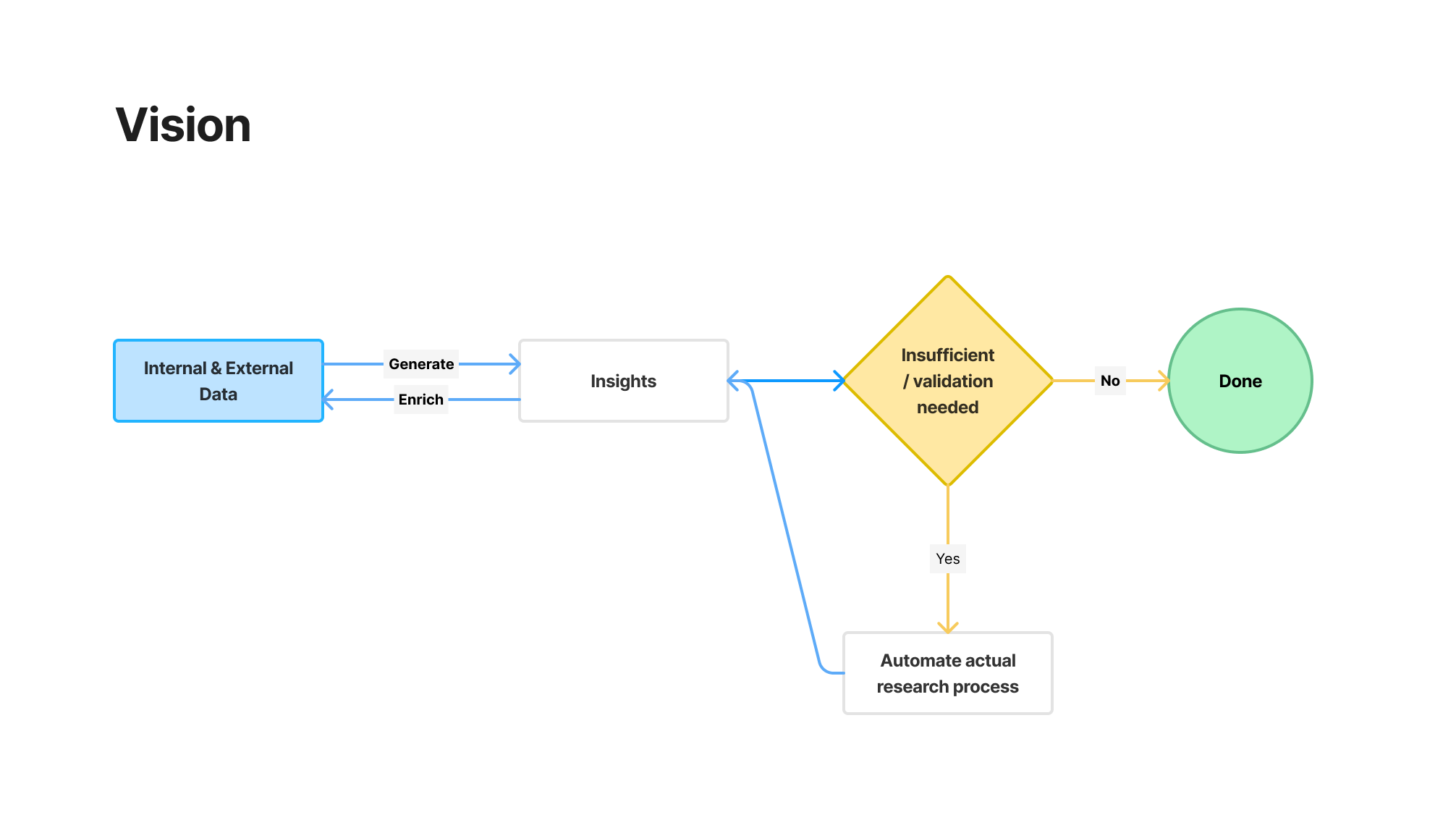
Principles
Project 02
Adapting More Variants
State & condition:
Established design system
Manageable engineering workload
Bottom-up culture
Experiments as common practices
Project 03
Converting Window Shoppers
An exercise for a hiring process completed in 2–3 nights