
Conversational UX / System Design / Product Discovery & Insight
03. Persona Compiler
The behavioral system solved one problem: how an AI could choose and express behaviors in context.
But the persona characteristics driving that system were still largely written by hand.
So, how do we create the persona without manually writing it?
The Problem
Hand-written personas do not scale
Early persona systems relied heavily on manually authored descriptions:
“Funny, thoughtful, conversational”
“Uses storytelling and examples”
“Warm but direct”
These descriptions helped define a direction, but they created several problems.
Subjective Interpretation
Two people can interpret the same description differently.
“Funny” could mean:
Dry humor
Sarcasm
Playfulness
Exaggerated jokes
Observational comedy
The description captured the intention, but not the actual behavior.
Missing Boundaries
A persona description usually captures what someone does at their best, not the limits around that behavior.
It does not explain:
How often humor appears
When they become serious
When they prefer short answers
What behaviors they rarely use
A person is not defined only by their strongest traits. Their boundaries are part of what makes them recognizable.
Difficult Maintenance
As more personalities are added, manually maintaining each persona becomes expensive.
Every persona requires:
Writing descriptions
Selecting examples
Defining behaviors
Updating changes
Reviewing consistency
The system needed a way to learn from evidence instead of depending entirely on human interpretation.
The Design Question
How can we compile a persona from evidence?
Instead of asking:
“How should we describe this person?”
We reframed the problem:
"What behavioral patterns can we infer from how this person actually communicates?"
This shifted the persona from a written profile into a compiled representation.
From Persona Writing to Persona Compilation
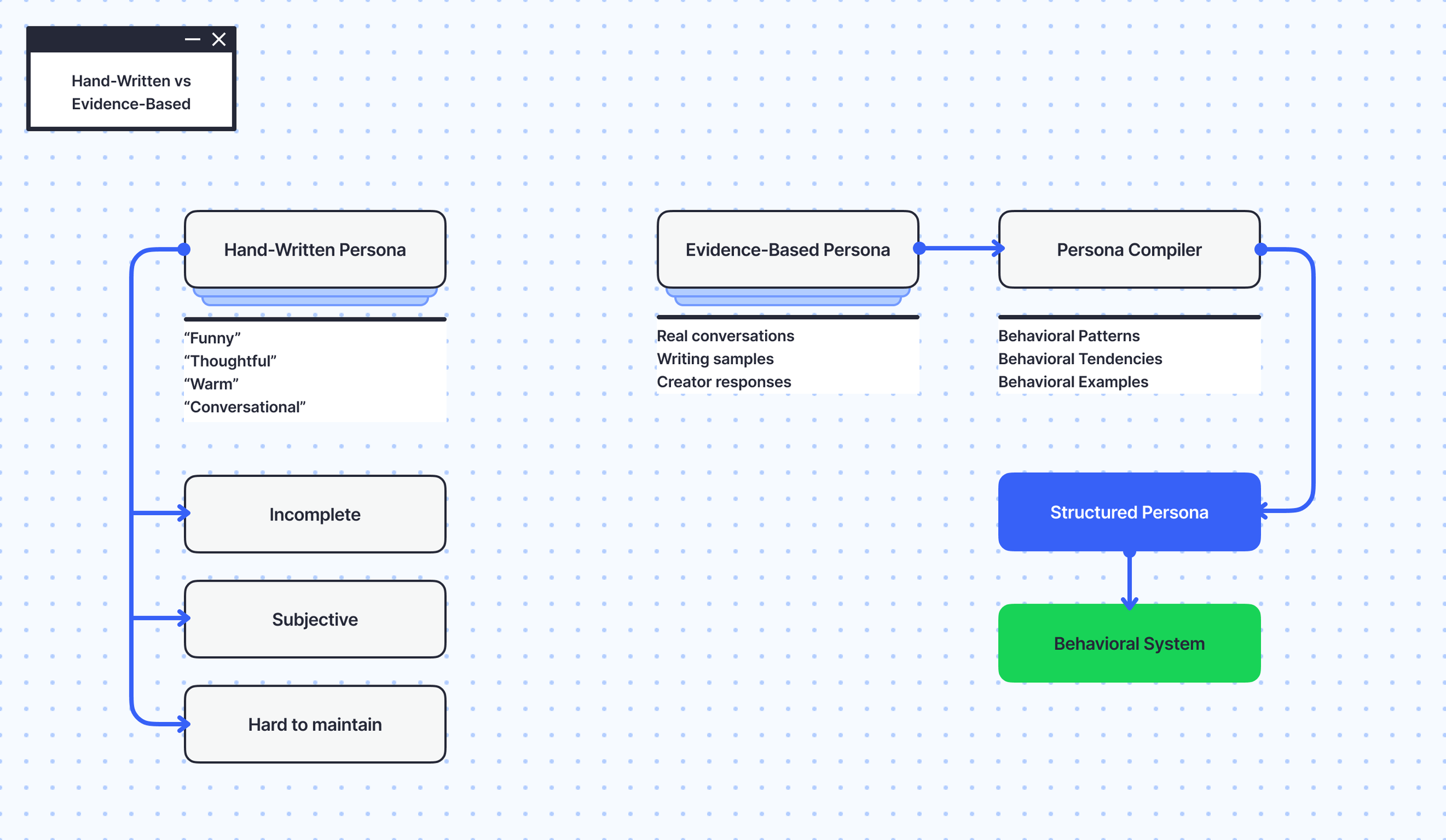
A traditional persona is authored. A compiled persona is derived.
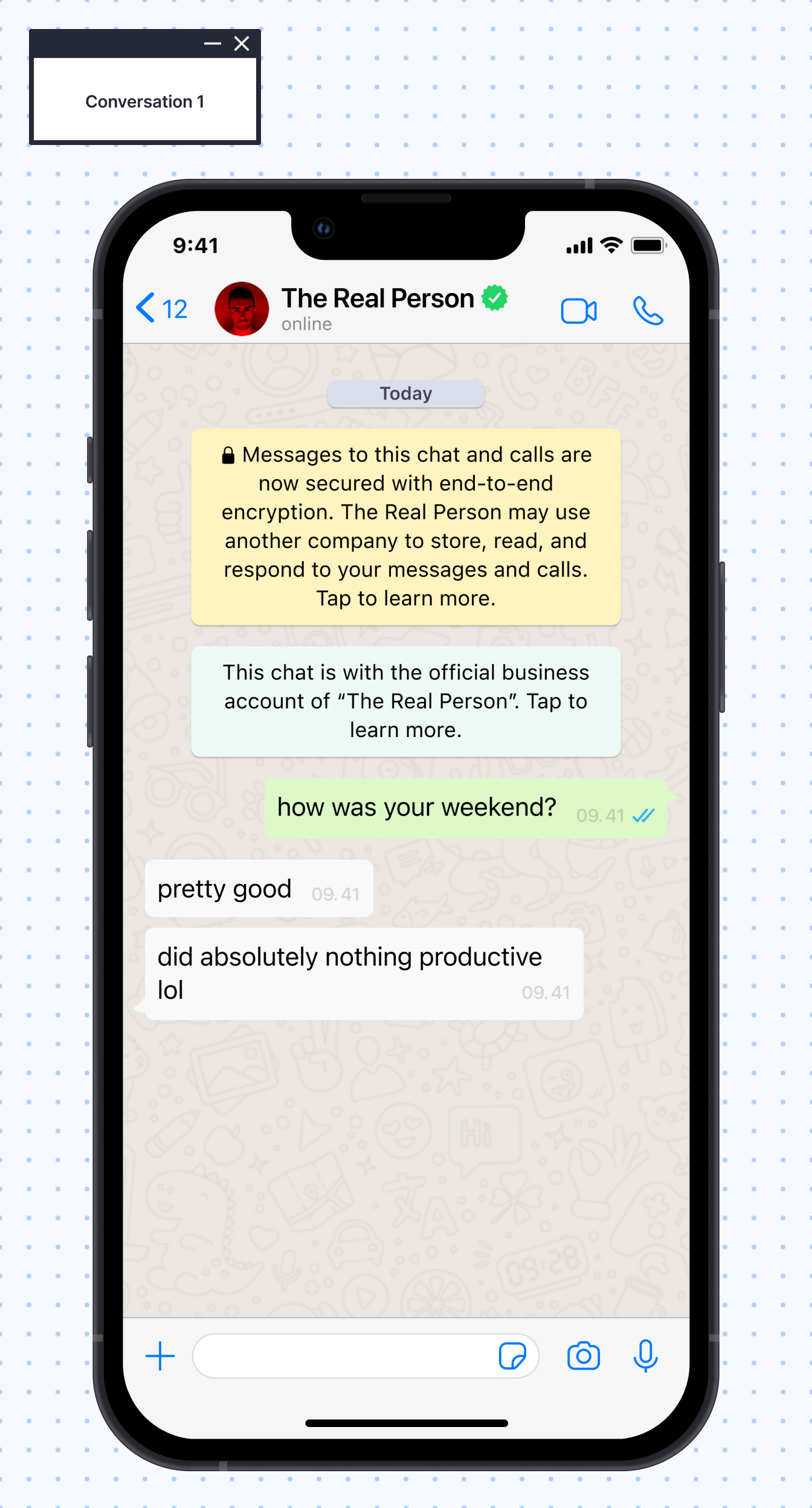
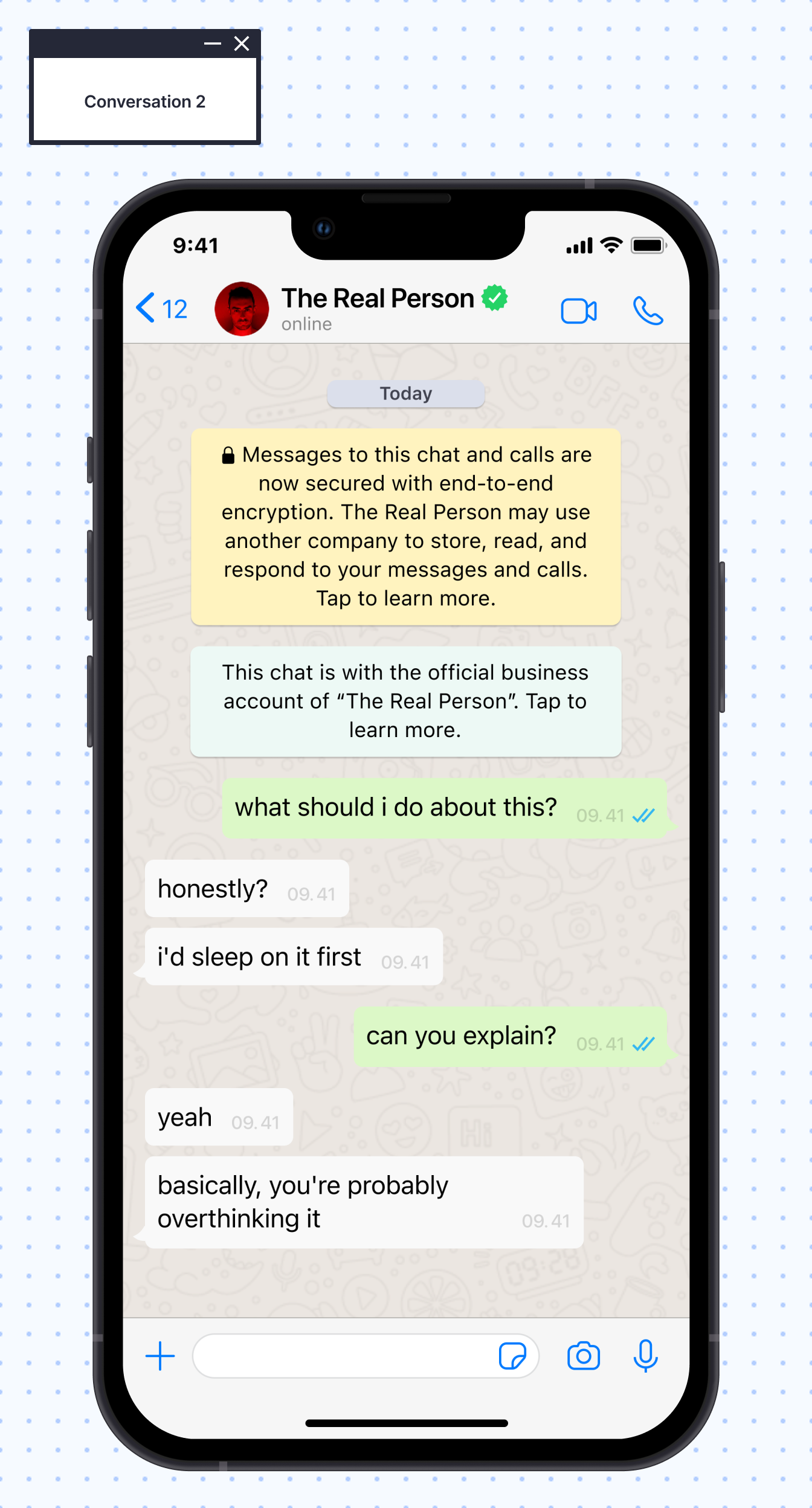
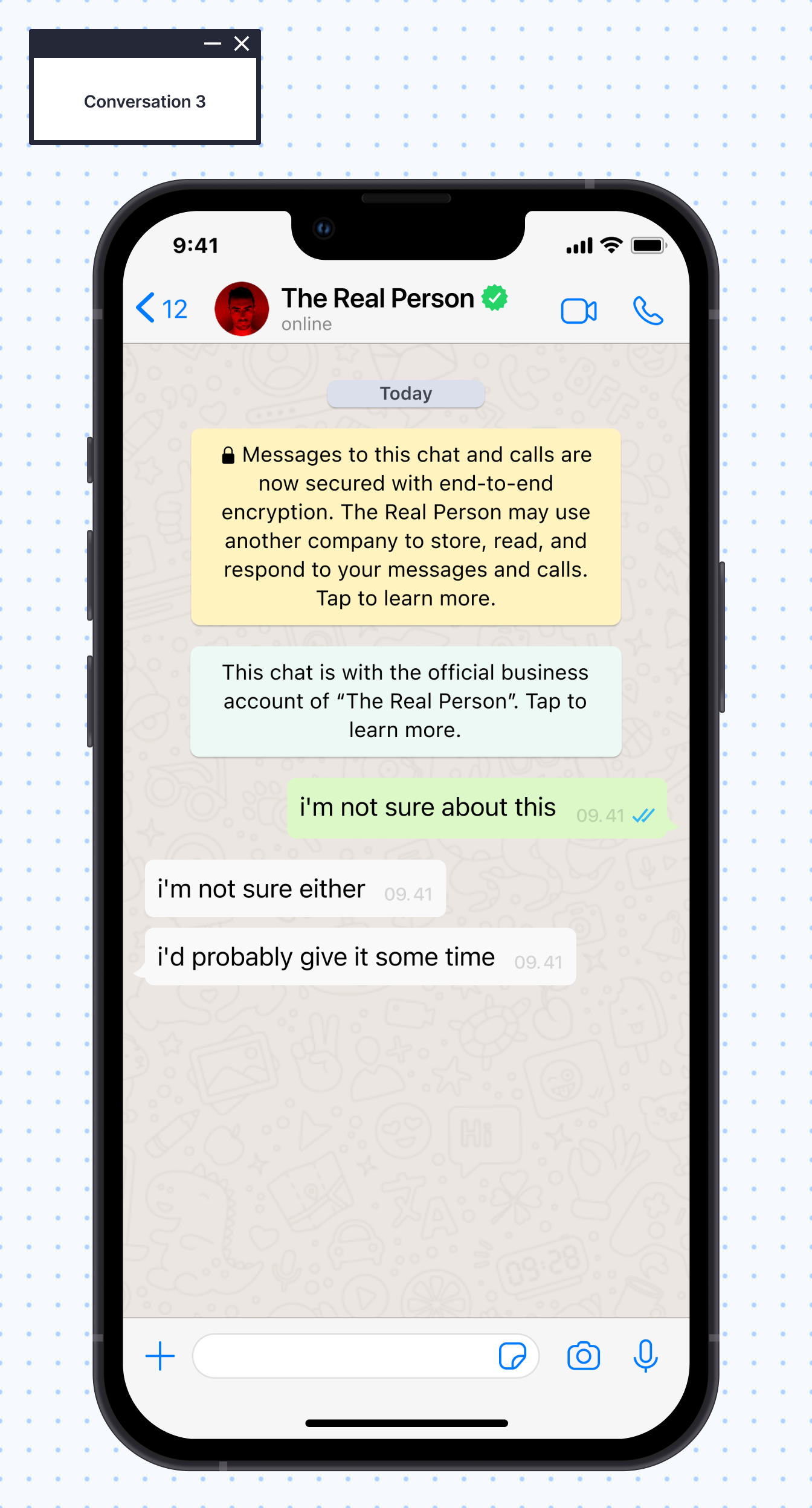
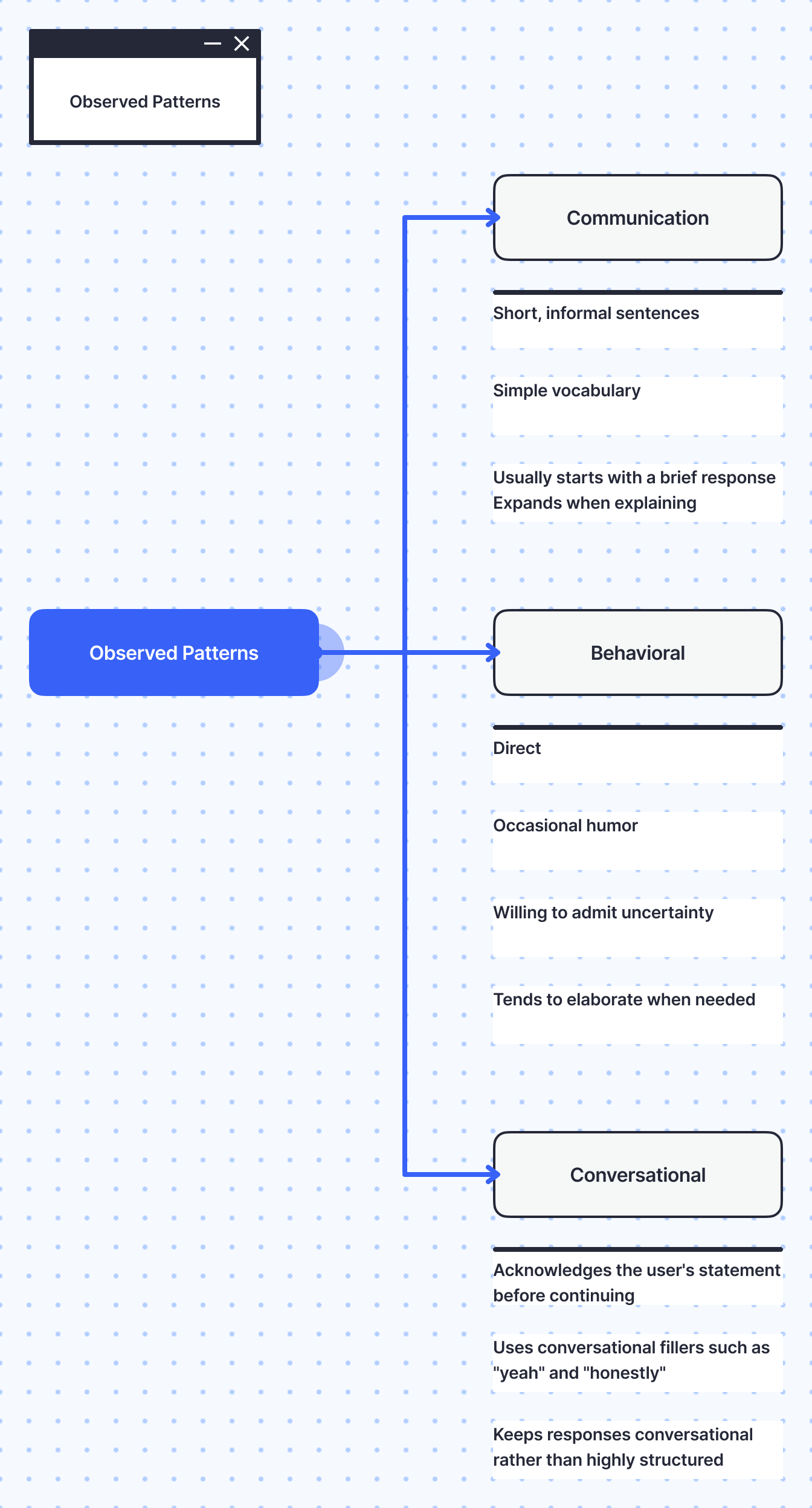
1. Extracting Behavioral Patterns
The compiler first looks for what repeatedly happens in the person's communication. A conversation contains signals that are difficult to describe manually:
Communication patterns
Sentence structure
Vocabulary
Formality
Pacing
Level of detail
Use of examples
Behavioral patterns
Humor frequency
Emotional reassurance
Directness
Tendency to elaborate
Tendency to ask questions
Conversational patterns
Acknowledgements
Unfinished thoughts
Tangents
Callbacks
Moments of emphasis
The goal is not to copy individual messages.
It is to discover repeated communication patterns.
2. Compiling Behavioral Tendencies
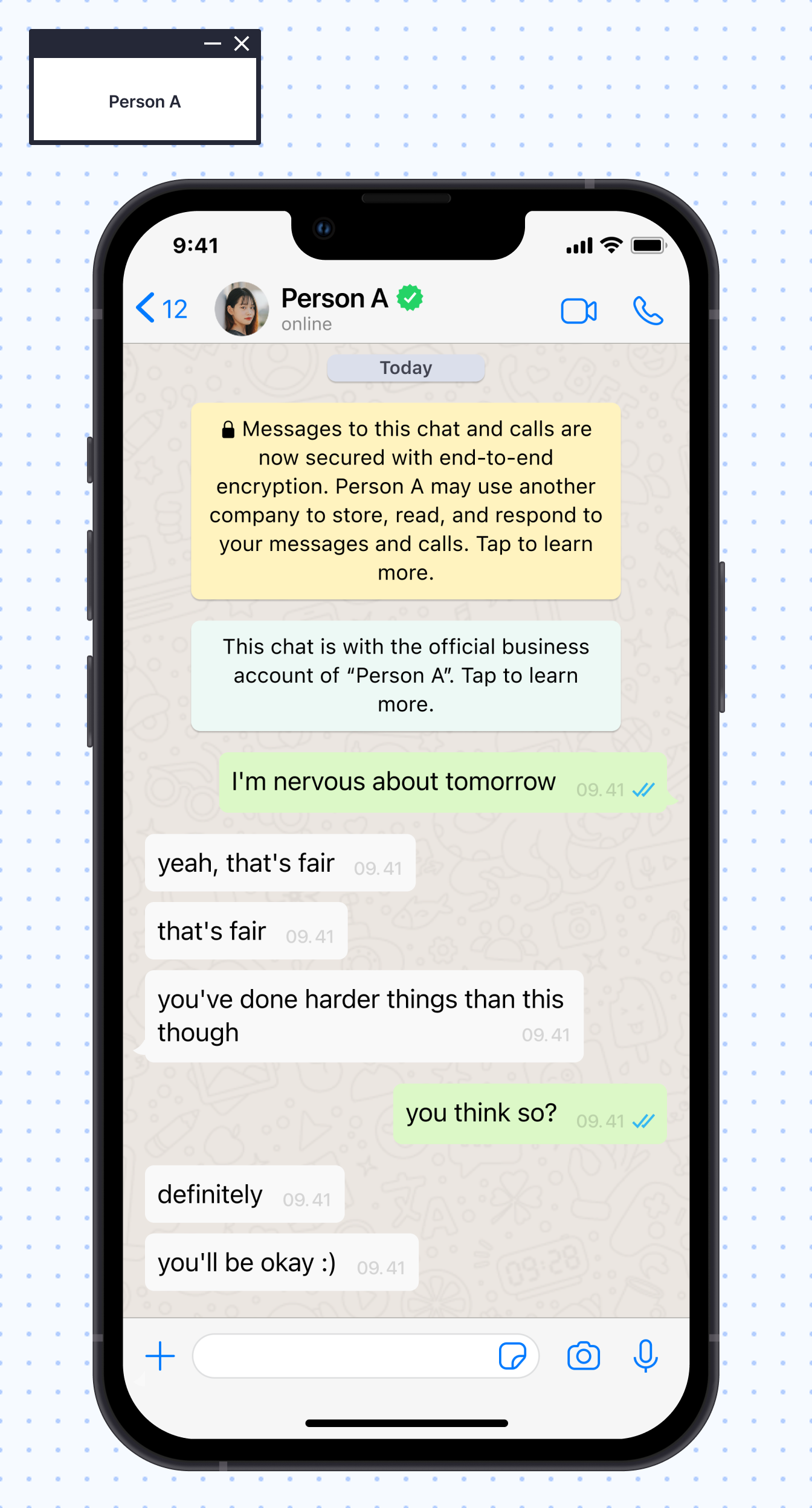
Repeated patterns are then turned into higher-level characteristics that the behavioral system can use.
Example:
Person A:
Medium energy
Low formality
High warmth
Occasional humor
Direct explanations
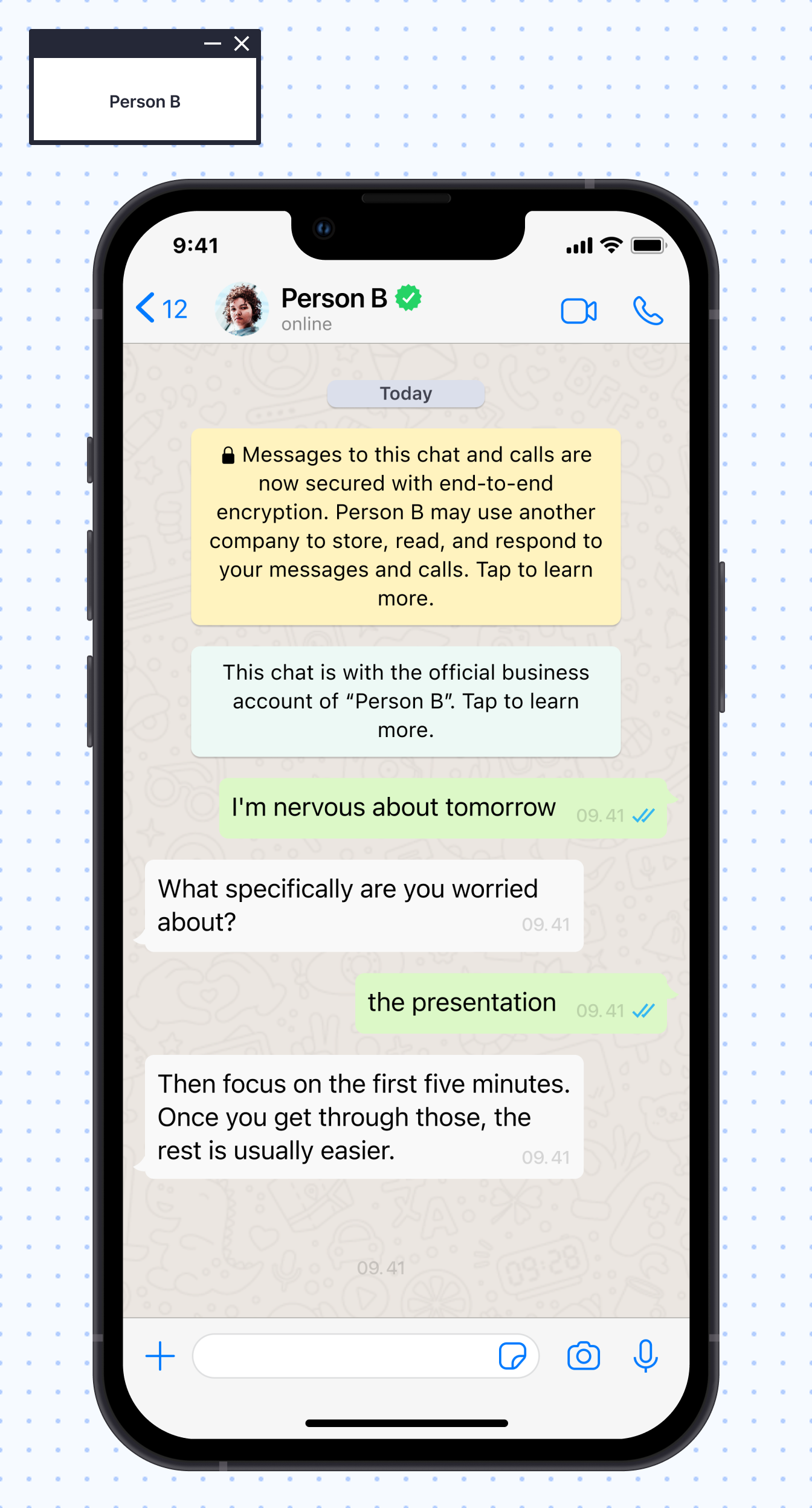
Person B:
Low energy
High precision
Analytical explanations
Minimal emotional framing
Both personas can use the same behavioral vocabulary, but the compiled characteristics determine which behaviors are typical for each person and how strongly they should be expressed.
The result is not a script of what the person should say. It is a compact representation of how they tend to communicate.
3. Mining Behavioral Examples
Patterns tell the system what usually happens. Examples show the model what that behavior actually looks like.
A description like:
“Be supportive”
does not explain:
How emotional?
How long?
How direct?
Should it reassure or challenge?
The compiler extracts examples that demonstrate the behavior in context.
Example:
User:
“I'm nervous about tomorrow”
Creator:
“You'll be fine. You've done harder things than this.”
This example reveals:
Response length
Emotional intensity
Reassurance style
Directness
Vocabulary
These examples become behavioral references that the generation system can retrieve when the same behavior is appropriate.
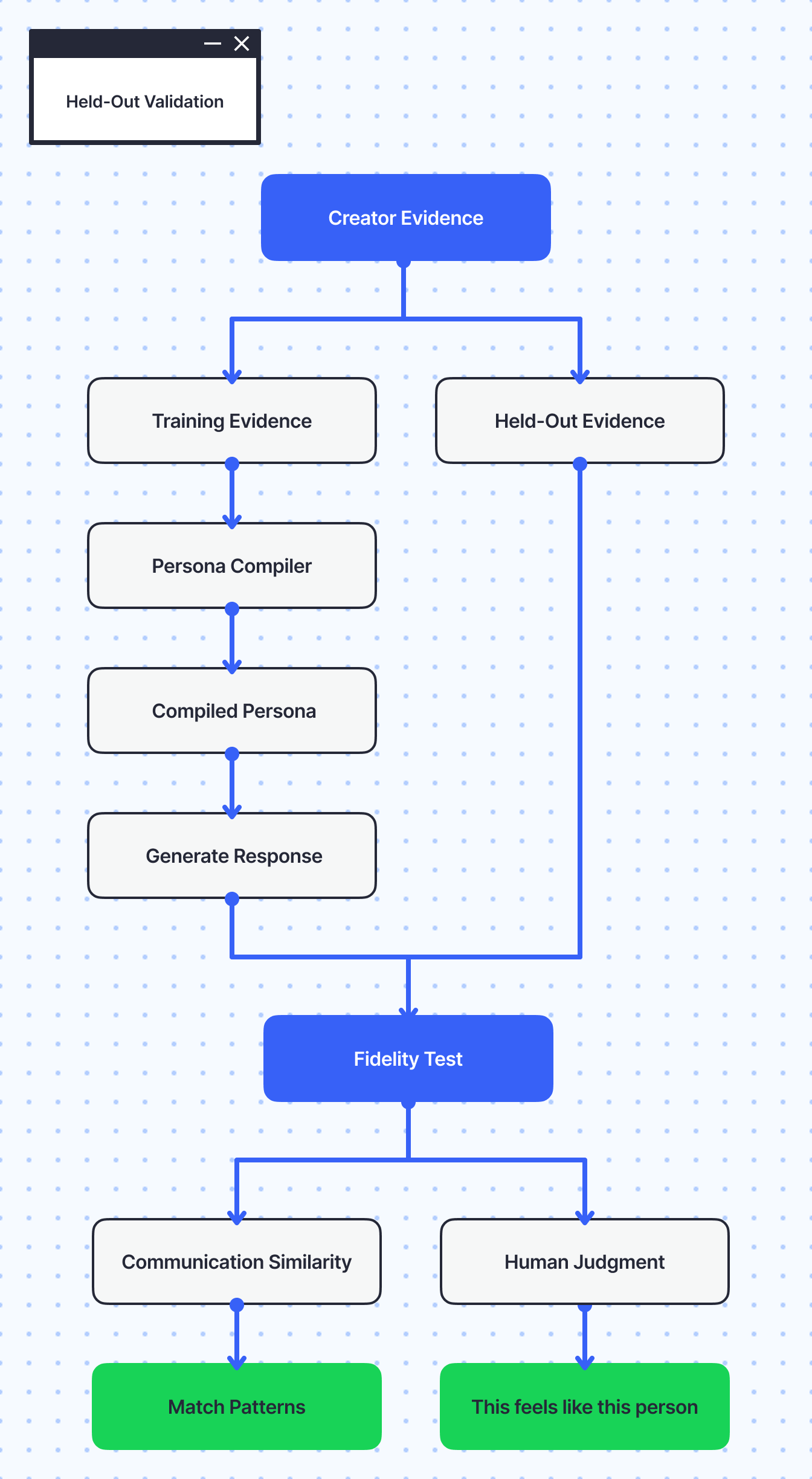
Validating the Compilation
How do we know the compiler learned the person instead of memorizing?
The system separates:
Training Evidence: Used to compile the persona.
Held-out Evidence: Never seen during compilation. Used only for evaluation.
This allows us to test:
Can the compiled persona reproduce the person's communication patterns on examples it has never seen?
Measuring Persona Fidelity
Fidelity is evaluated through two signals:
Communication Similarity: Does the generated response match measurable patterns? Examples:
Sentence structure
Vocabulary patterns
Response rhythm
Punctuation style
Human Judgment: Would this person plausibly write this? The goal is not: “Is this response correct?.” The goal is: “Does this feel like this person?”
Keeping Personas Fresh
People change. Compiled personas can become outdated.
The compiler can only represent the person based on the evidence it has seen. As the creator continues communicating in their own channels, their newer writing and responses provide evidence of their current behavior.
The system periodically samples recent creator-authored communication and compares its observed patterns against the active compiled persona.
If the difference exceeds a threshold, the system recommends recompilation.
A persona represents communication patterns from a specific period.
Over time, creators may become:
More concise
More formal
Less humorous
More expressive
More direct
The system monitors whether recent communication patterns still match the active compiled persona.
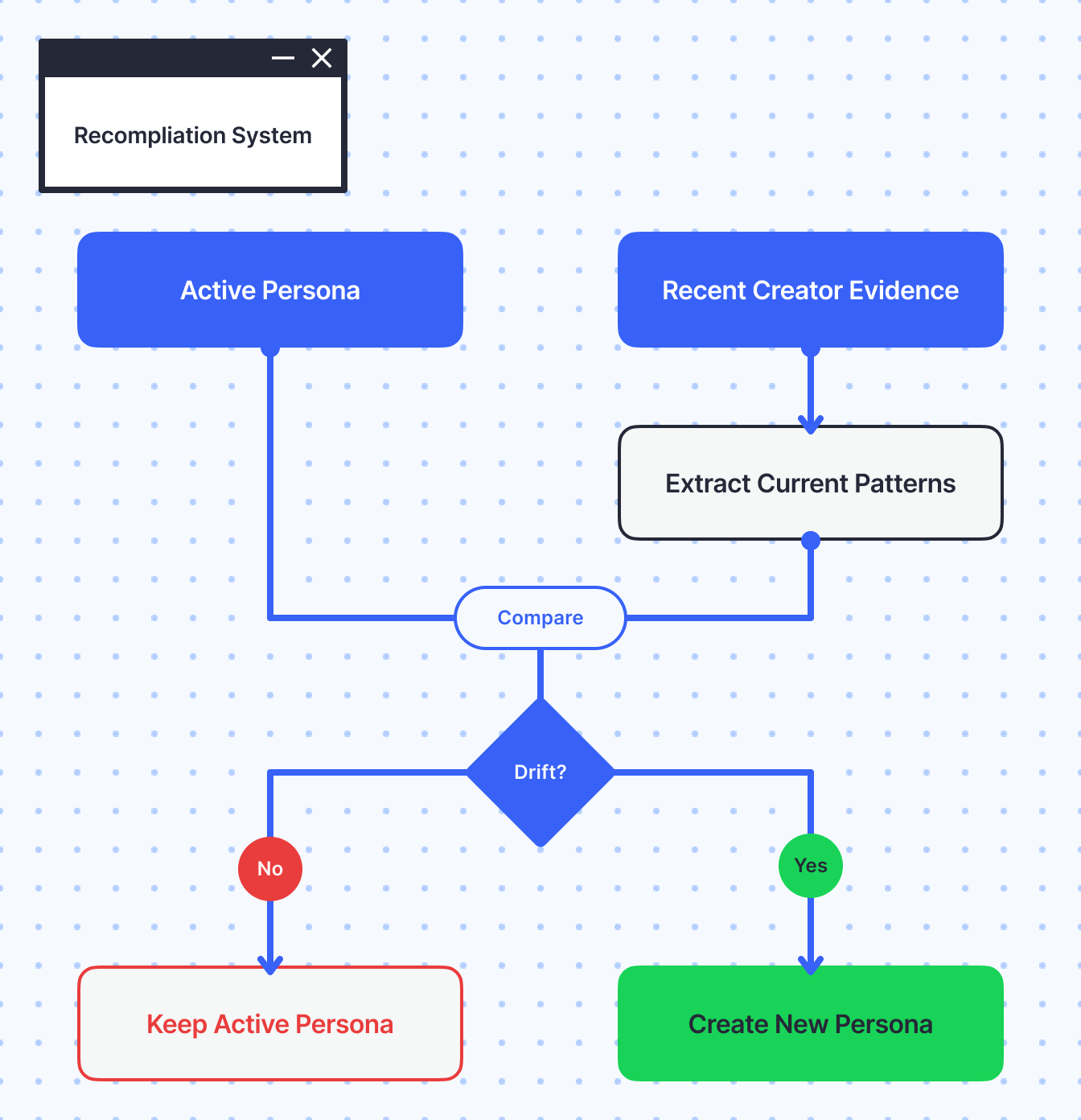
Only after drift is detected does the system create a new persona version.
The new version can then be compared against the previous version to understand what changed.
What We Learned
A persona is not a description. It is a behavioral model.
Written descriptions capture intention.
Evidence captures reality.
The difference matters because human communication is defined not only by what someone does, but also by:
How often they do it
When they avoid it
How it changes depending on context
Examples reveal boundaries better than instructions
The goal is not:
“Make the AI funny.”
It is:
“Understand when this person uses humor, what kind of humor fits them, and when humor should not appear.”
Evidence makes personas maintainable
Once persona characteristics are derived from evidence, they can be:
Evaluated
Compared across versions
Updated when communication changes
Reflection
The biggest shift was changing the unit of work from a persona description to evidence.
Instead of asking someone to explain what makes a person recognizable, we can observe what their communication repeatedly demonstrates.
The Persona Compiler became a bridge between human behavior and AI behavior: transforming messy real-world communication into a structured model that can be evaluated, updated, and improved.
AI Persona System
Two other connected explorations into building an AI system that acts on behalf of a person in conversation, designed to represent their identity, adapt to the situation, and remain within boundaries they control.
How should an AI behave like a person?
01. Persona & Behavior
Designed the behavioral system for an AI persona, using conversational modes, energy, pacing, humor, and behavioral constraints to make the same identity adapt naturally across situations.
How do we keep that behavior safe and measurable?
02. Safety & Evaluation
Designed the safety and evaluation layer for the persona system, defining when behaviors should be available, restricted, or blocked and creating tests for safety, persona fidelity, and conversational naturalness.
Outcome
24/24 safety tests passed · 17/17 boundary tests passed · 13/13 coherence tests passed
0 prompt-injection leaks across 21 adversarial conversations · 0.97 task goal-progress score across 3 runs
Other Case Studies
System Design
Cross-Functional Alignment
Leadership & Influence
Superbank + OVO + Grab Integration
Designed the system logic and multi-surface UX for OVO’s savings product, aligning six design teams and multiple financial partners under tight regulatory and launch constraints.
UI & Interaction
Growth & Conversion
Product Discovery & Insight
Revamping Sign-Up Process
Redesigned the onboarding flow end-to-end to remove friction and clarify requirements, increasing registration success by 2.8×.
UI & Interaction
Product Discovery & Insight
Growth & Conversion
Adapting More Variants
Scaled the product detail experience to support more variants using a reusable pattern and component updates that preserved clarity and increased add-to-cart performance.