
Leadership & Influence
Structuring a 24-Person AI Team
I was appointed to lead one of the largest and most complex teams in the company-wide AI sprint — a 24-person, 4-country Research Automation team.
Context
Grab launched a 3-month company-wide AI sprint. Everyone had to pause BAU and work on an AI initiative.
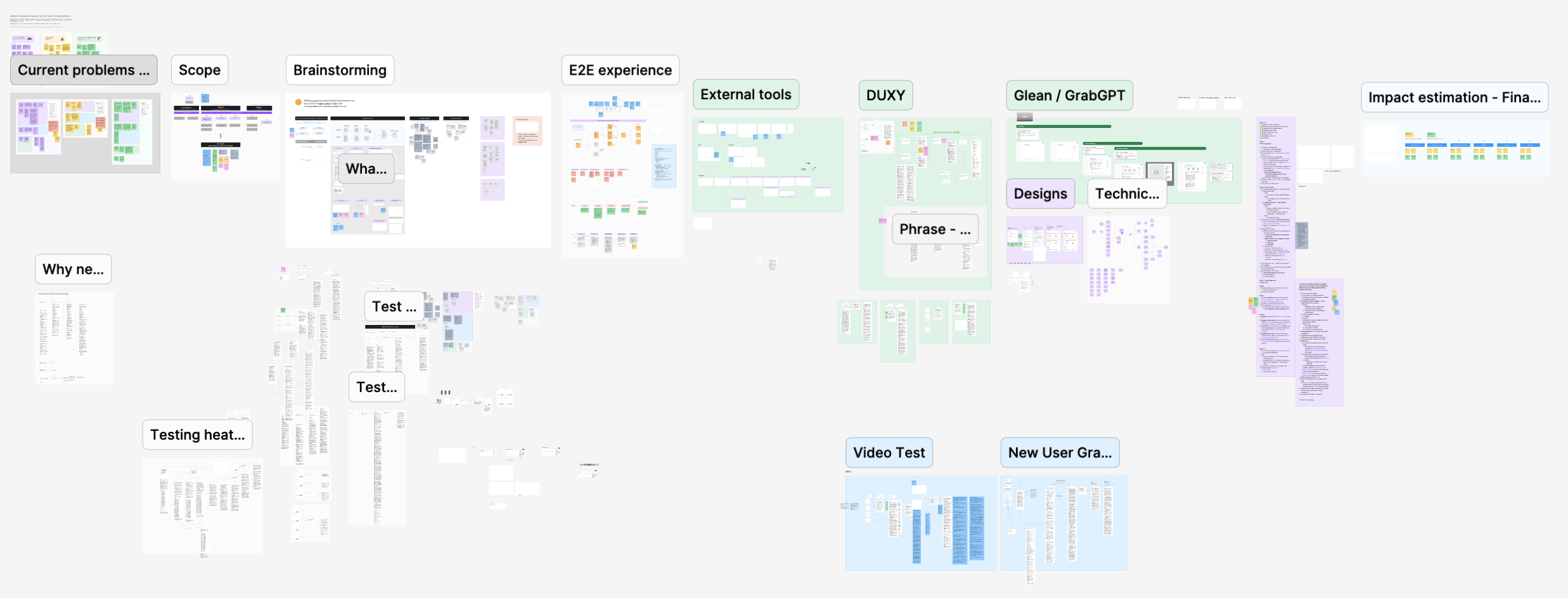
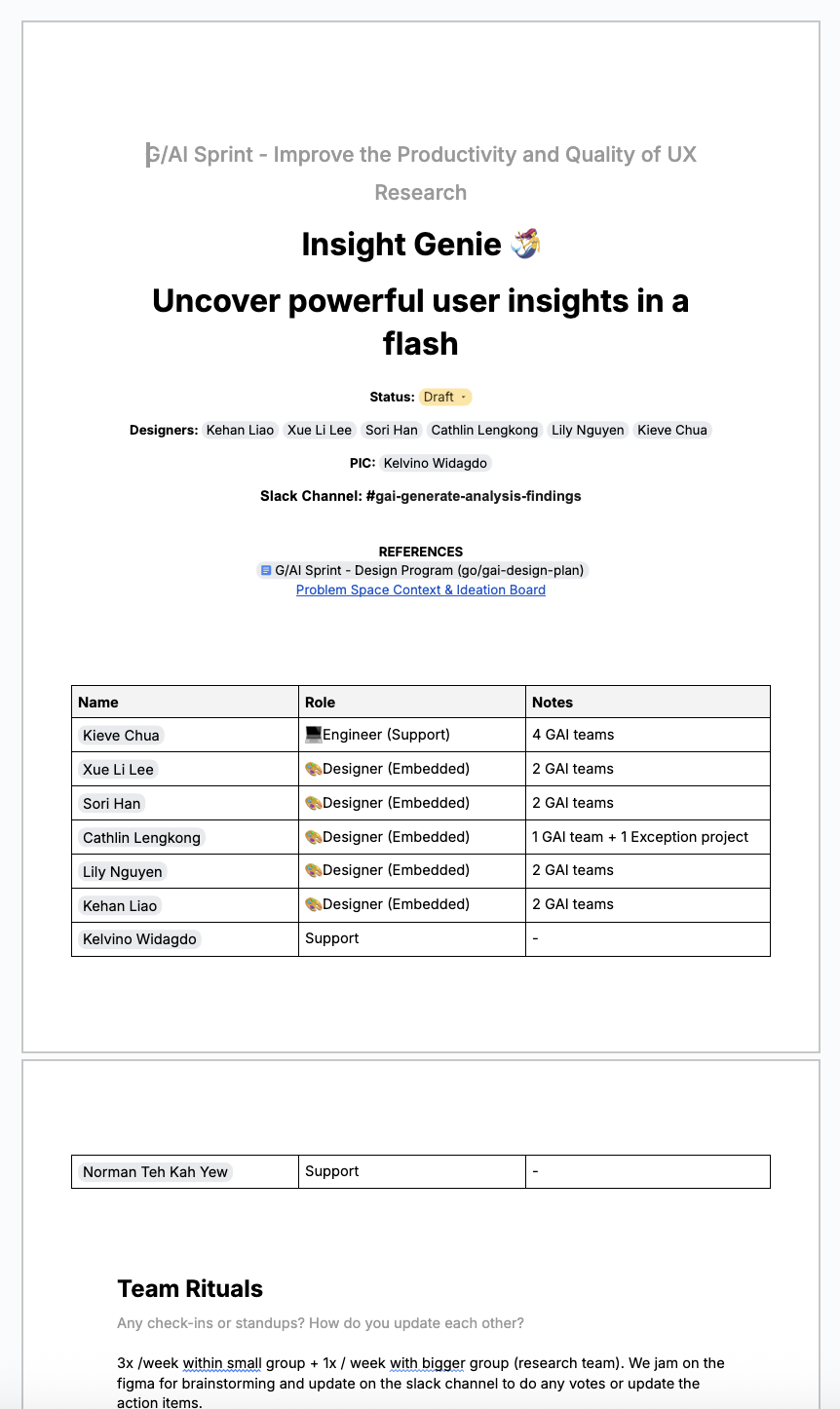
Design submitted dozens of problems in a shared Figma Jam board. 24 contributors across Singapore, Indonesia, Malaysia, and India picked the Research Automation topic.
There was:
No workflow
No alignment
No squad structure
No decision-making model
Conflicting expectations from leaders
Limited engineering availability
I was chosen to lead this entire research topic team.
The Challenge
A large team running in 24 different directions with no real output
A complex, mixed group of 24 contributors with:
Different markets, cultures, seniorities
Dozens of overlapping problem statements
Unclear goals
BAU conflicts
High expectations but no structure
Mid-sprint leadership direction changes
What I Did
Turned chaos into a clear problem space
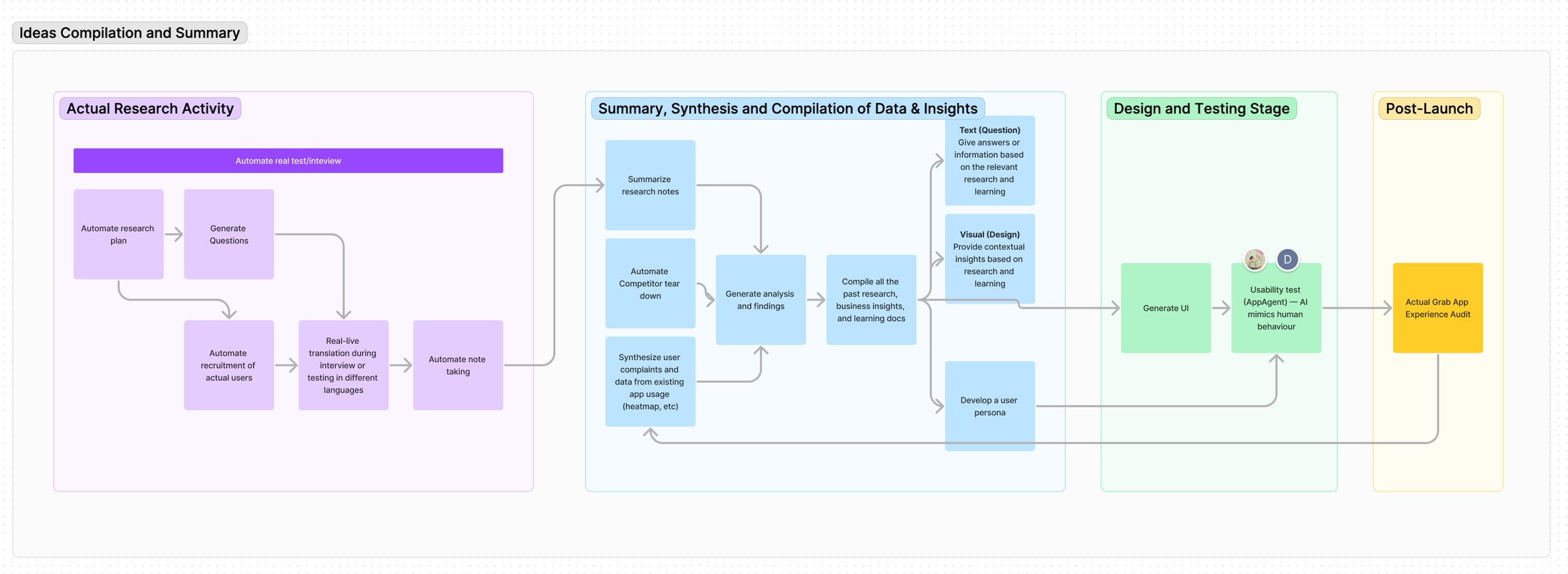
I synthesised the full set of problems into an end-to-end research workflow map.
Then I ran severity discussions and async voting across all 24 members to agree on four problem themes
This moved the team from fragmented noise to a shared understanding of where the biggest pains were.
Built the operating model from zero
Because this sprint team had no structure, I created the entire operating system:
Rituals
Each squad set their own recurring syncs
1×/week full-team sync
Async update and discussion through Slack & FigJam
Decision model
Diverge → vote → converge
Clear scoping templates
Alignment loops
Weekly demos to design, product, and engineering leaders
This gave our cross-country team a predictable rhythm.
Formed and aligned the squads
The themes became four squads:
Research Ops Automation
Insight Synthesis Automation
Insight Accessibility
UT Automation
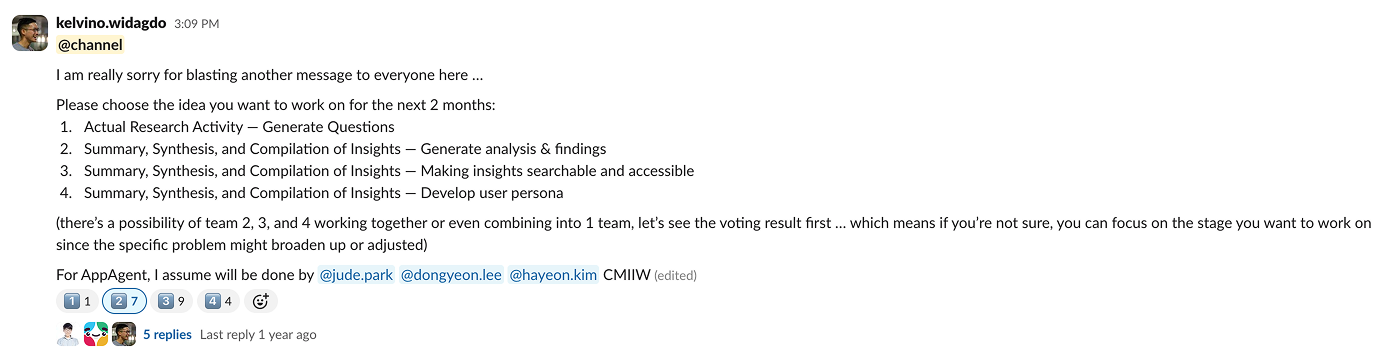
I positioned contributors based on interest and capability.
Each squad received:
A clear problem statement
Boundaries
Rituals
Template for demonstrating value
Navigated a major leadership shift mid-sprint
Midway, leadership recommended killing Insight Accessibility to shrink the team from four squads to three.
After negotiation, they told me:
“Bring it down from four squads to three —
you decide which squad gets cut.”
I didn’t cut Insight Accessibility.
Instead, I made a structural move:
Merged Research Ops Automation + Insight Synthesis Automation into one larger, coherent squad
Preserved Insight Accessibility
Reframed the overall direction into an integrated long-term system
Protected morale, motivation, and ownership
Aligned leaders without conflict
Outcome
The squad leadership initially wanted removed — Insight Accessibility — was later chosen to present at EXCO during the sprint.
Ensured delivery, visibility, and continuation
By the end of the sprint:
3 squads delivered usable POCs and prototypes
1 squad presented at a company brownbag session
Work was featured in the company newsletter
2 squads gained visibility through EXCO presentations
The research automation work continued after the sprint— sustained by motivation, not leadership push
This continuation happened because the team cared deeply and believed in the value, not because they’re mandated to.
Impact
Structural Impact
Built the complete operating model for our 24-person, multi-country team
Turned dozens of messy ideas into a coherent problem space
Created rituals, alignment loops, and decision models for predictable execution
Stabilised progress despite scope shifts and external pressure
Leadership Impact
Balanced four countries with different working styles and opinions
Protected a squad scheduled for removal without breaking leadership trust
Made hard structural decisions to maintain momentum and morale
Kept contributors motivated even after leadership support faded
Created psychological safety and focus in a chaotic environment
Organisational Impact
Research Automation and Insight Accessibility squad presented to EXCO
Featured in design org newsletters
Presented in design brownbag sessions
Other company requested demos
The work became the basis for the long-term research automation initiative
Why This Matters
Delivered inside a large, diverse, ambiguous AI sprint team
Created alignment across markets
Brought order to ambiguous initiatives
Structured teams for impact
Protected momentum through leadership shifts
Managed cross-functional complexity
Balanced human and strategic decision making
System Design
Leadership & Influence
Research Automation with AI
Designed an AI-powered insight workflow that reduced research time from months to minutes, raised insight quality, and freed designers to focus on actual design work.
System Design
Cross-Functional Alignment
Leadership & Influence
Superbank + OVO + Grab Integration
Designed the system logic and multi-surface UX for OVO’s savings product, aligning six design teams and multiple financial partners under tight regulatory and launch constraints.
UI & Interaction
Growth & Conversion
Product Discovery & Insight
Revamping Sign-Up Process
Redesigned the onboarding flow end-to-end to remove friction and clarify requirements, increasing registration success by 2.8×.
Leadership & Influence
Talent Growth
In my journey across 3 leadership roles, I've transformed 4 interns and 3 juniors to seniors and leads. I share unique principles, along with their case studies, that have driven these transformations.
UI & Interaction
Product Discovery & Insight
Growth & Conversion
Adapting More Variants
Scaled the product detail experience to support more variants using a reusable pattern and component updates that preserved clarity and increased add-to-cart performance.