
System Design / Leadership & Influence
Research Automation with AI
Research at Grab had become too slow, too expensive, and too inconsistent to support evidence-based product decisions. I designed an AI-powered insight workflow that reduced research time from months to minutes, raised insight quality, and freed designers to focus on actual design work.
PROBLEM
Designers were doing research work they weren’t trained or scoped for
Most designers could no longer run foundational research.
Those who tried spent their limited bandwidth on:
planning
note-taking
synthesis
report writing
This work sat outside their role, slowed delivery, and produced inconsistent insight quality.
Vendor research was slow and unaffordable
Most teams avoided research entirely because vendors cost USD 40k–60k per study and required 4–6 months to complete.
Company expected insight quality the org could no longer support
Product and designers were forced to ship features with partial insights or none at all.
This created risk, rework, and low confidence in product decisions.
Outcome
Validated, end-to-end workflow
I created a validated, end-to-end workflow that:
automates research planning
generates first-pass insights
synthesizes across internal + external sources
produces structured recommendations
uses a clear validation model for accuracy, consistency, and relevance
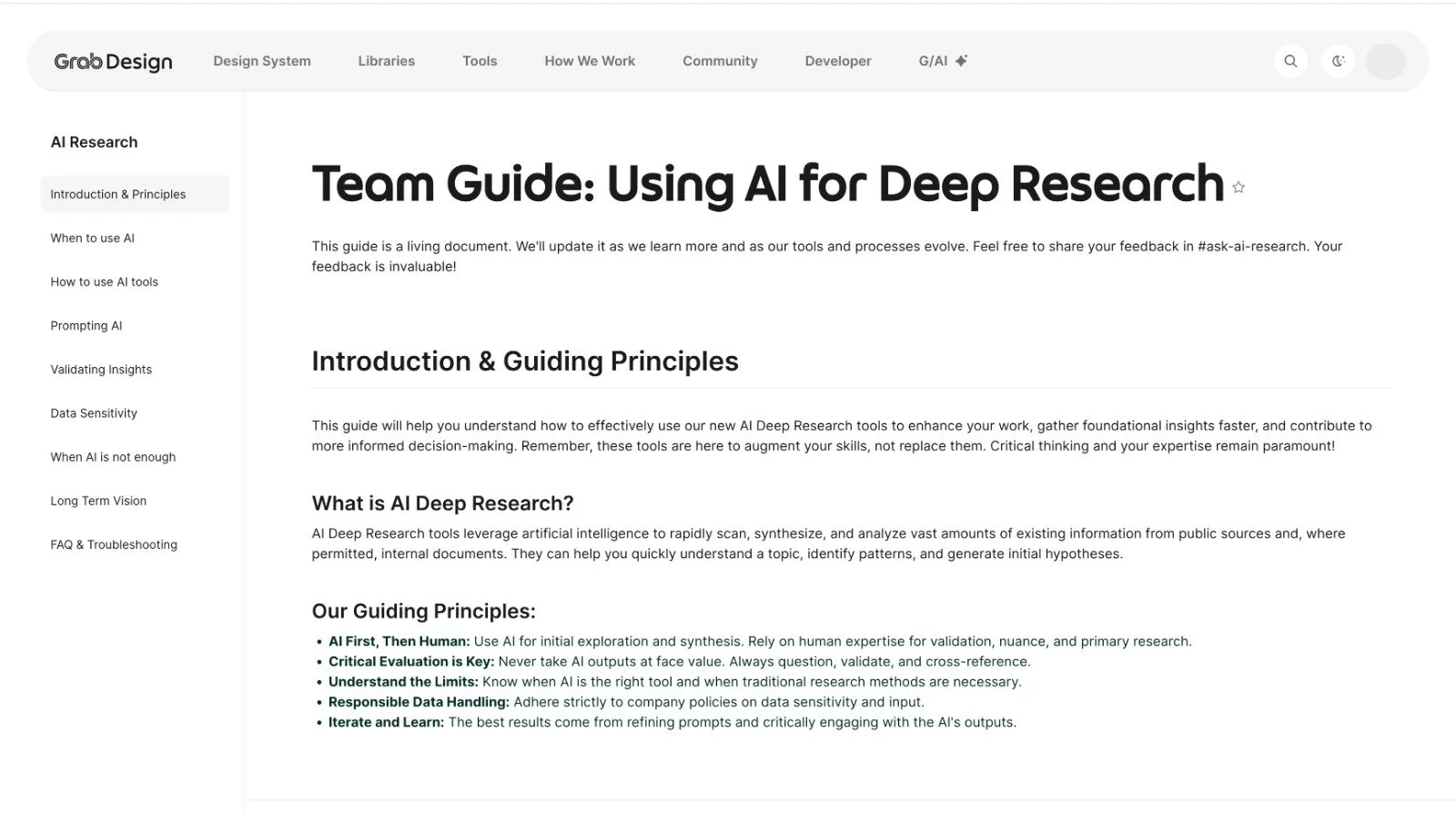
It’s now available on the Grab Design internal site, used across teams, and adopted as the reference workflow for AI-assisted research.
My Role
Done with minimal engineering support
Defined the new research workflow from scratch
Evaluated multiple AI engines + selected the safest high-performer
Designed the prompt architecture
Built the insight validation model (accuracy, consistency, relevance)
Documented the full system for the design org
Ran pilot sessions with multiple squads
Guided adoption across teams and design leadership circles
Process
Problem Framing
The sprint direction collapsed after leadership shifted the mandate.
I reframed the problem around the real operational constraints:
no researchers
designers overloaded
vendor research too slow/expensive
leadership demanding insight at scale
I mapped the opportunity space and defined:
“Fast, reliable insights without specialists or vendor dependencies.”
Exploration & Testing
I benchmarked multiple AI engines and tested them directly against vendor reports.
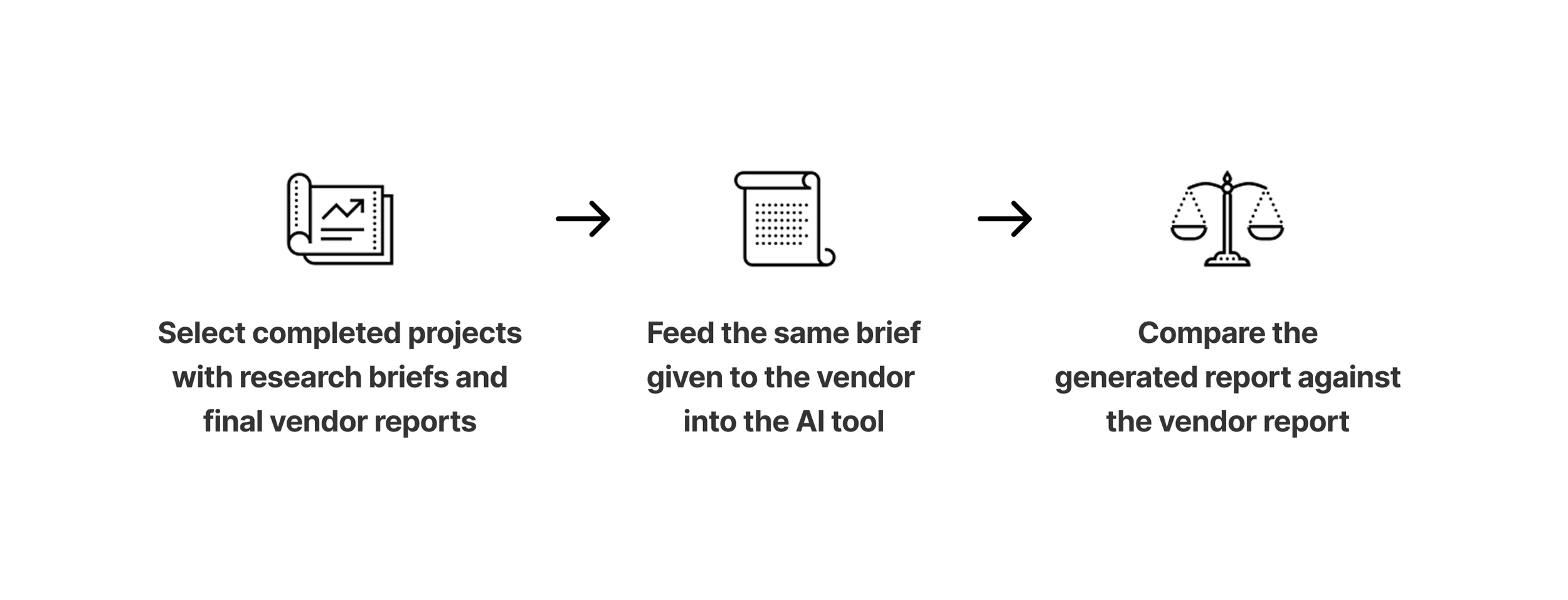
What I evaluated
Gemini Deep Research
DeepSeek DeepThink(discarded due to compliance)
GPT Deep Research
Grok Deeper Research
Internal approved engines
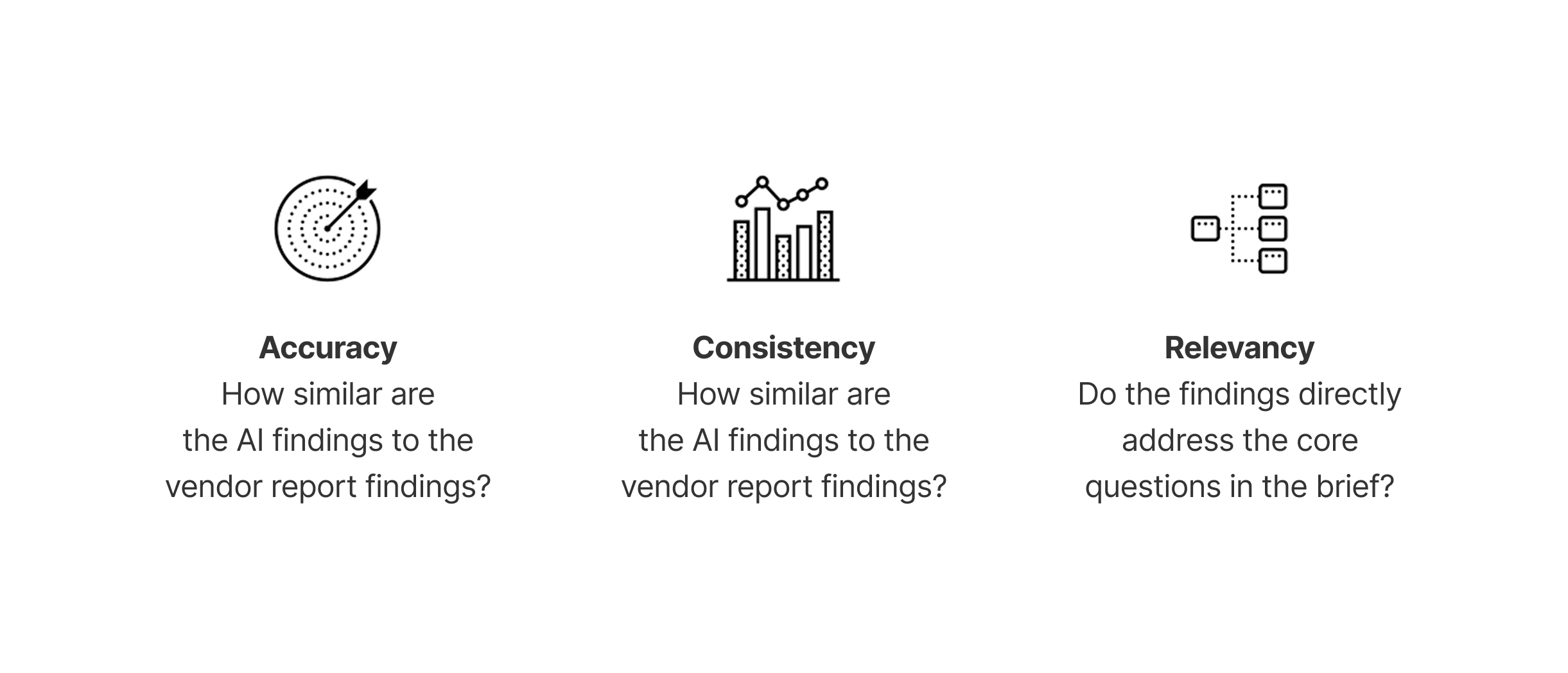
How I evaluated
Accuracy: similarity of AI outputs vs vendor findings
Consistency: repeatability across 5 runs
Relevance: alignment to the brief and core questions
A few key breakthroughs:
AI accuracy only increases when the research brief is high-quality → so I built a prompt to generate better briefs.
Not every research type is suitable → I defined guardrails for human vs AI boundaries.
The fastest path was not building custom tools → use the internal AI platform as the MVP.
This testing became the foundation of the final workflow.
System Direction
Leadership pivoted the mandate after sprint toward a zero-engineering solution. I merged the original vision (tooling + actual research automation) with the new constraint (AI deep research) into a unified roadmap: AI deep research, with actual research automation as the long-term direction.
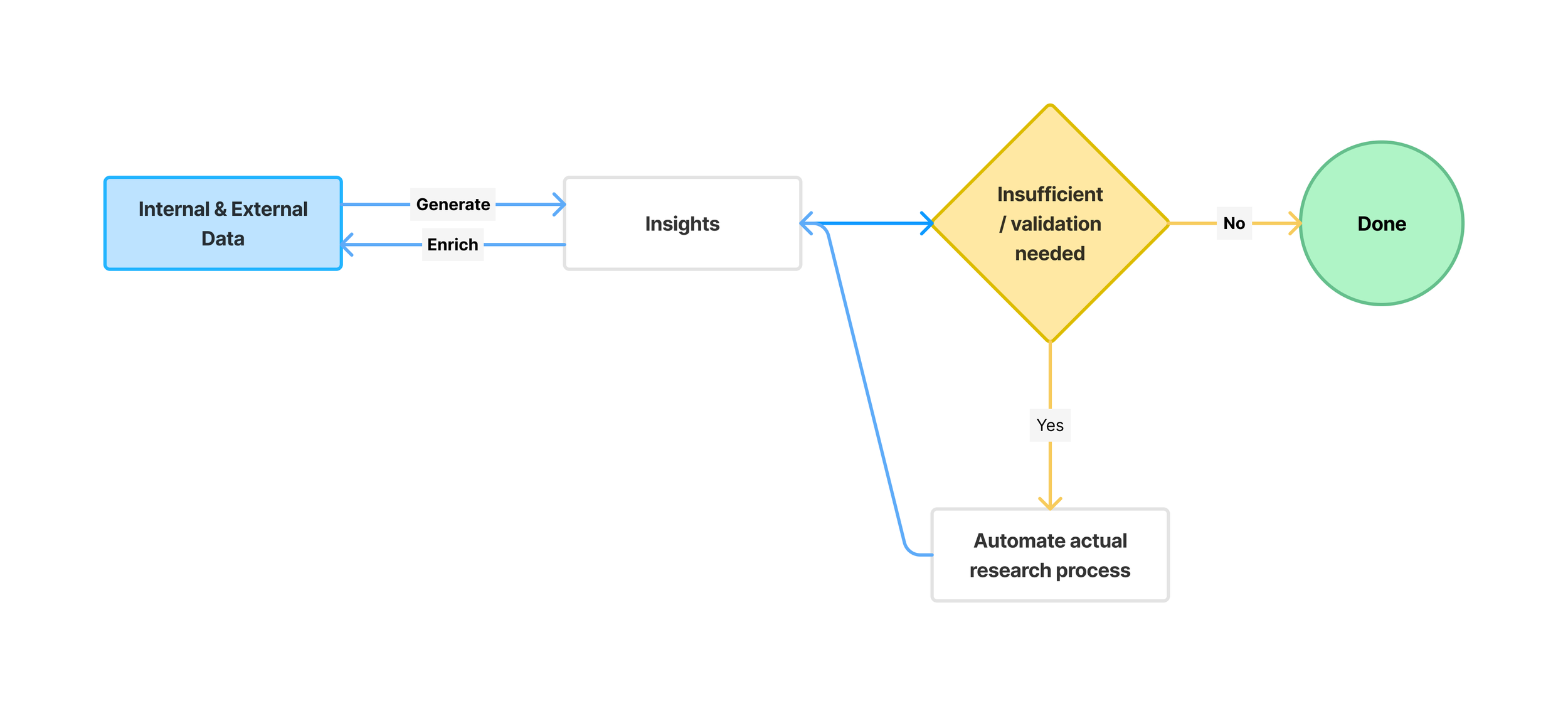
MVP Deployment
I deployed a practical, production-ready MVP:
Inputs:
Raw research brief
Context + known data
Planned scope of inquiry
AI workflow:
Generate improved research brief
Run first-pass analysis
Synthesize across sources
Structure insights + recommendations
Validated using accuracy, consistency, and relevance model
This replaced months of manual labor with a minutes-based workflow.
Adoption
The workflow spread through:
Internal team demos
Design camps
Design leadership syncs
Cross-team requests from product + business
Pilot support for squads during live projects
It’s now published on the Grab Design internal site as the standard research workflow.
Impact
Time, cost, quality, and org-level Influence
Research cycles cut from 4–6 months → minutes.
Freed designers to focus on design, not research mechanics.
Teams avoided paying USD 40k–60k per vendor study.
Standardized evaluation through accuracy, consistency, and relevance.
Improved trust in research outputs.
Became the reference research workflow across teams, with multiple squads requesting to use it during pilots.
What This Demonstrates
Ability to ship high-leverage tools with minimal engineering support
Systems thinking
Product strategy under ambiguity
Evidence-based design
Prompt architecture
Workflow design
Cross-functional influence
Leadership & Influence
Structuring a 24-Person AI Team
Led one of the largest and most complex teams in the company-wide AI sprint — a 24-person, 4-country Research Automation team. with no structure, overlapping ideas, unclear expectations, and heavy BAU load.
System Design
Cross-Functional Alignment
Leadership & Influence
Superbank + OVO + Grab Integration
Designed the system logic and multi-surface UX for OVO’s savings product, aligning six design teams and multiple financial partners under tight regulatory and launch constraints.
UI & Interaction
Growth & Conversion
Product Discovery & Insight
Revamping Sign-Up Process
Redesigned the onboarding flow end-to-end to remove friction and clarify requirements, increasing registration success by 2.8×.
Leadership & Influence
Talent Growth
In my journey across 3 leadership roles, I've transformed 4 interns and 3 juniors to seniors and leads. I share unique principles, along with their case studies, that have driven these transformations.
UI & Interaction
Product Discovery & Insight
Growth & Conversion
Adapting More Variants
Scaled the product detail experience to support more variants using a reusable pattern and component updates that preserved clarity and increased add-to-cart performance.